

Hyperbaric Chamber: Benefits, Risks & What to Expect
Dealing with a slow-healing wound or seeking advanced recovery methods can be a frustrating and uncertain process. You may have heard about hyperbaric oxygen therapy (HBOT) as a potential solution, often used to speed up the healing of stubborn wounds and other serious medical conditions.
The challenge is navigating the complex information surrounding this treatment. It's difficult to separate proven medical facts from wellness claims, understand the real risks, and figure out what to expect from the procedure. Without clear, practical guidance, you risk making a decision based on incomplete or misleading information.
This guide provides a transparent, detailed breakdown of what a hyperbaric chamber is, how it works, and its proven benefits. We will cover the specific FDA-approved uses, potential side effects, and what a typical session feels like, giving you the actionable knowledge needed to have an informed conversation with your doctor.
Key Takeaway
A hyperbaric chamber is a medical device used for hyperbaric oxygen therapy (HBOT), where a patient breathes 100% pure oxygen in a pressurized environment. This process is designed to significantly boost oxygen levels in the blood, which can accelerate cellular repair and fight infections.
- It is FDA-approved for treating conditions like severe infections, non-healing wounds, and decompression sickness.
- The therapy works by dissolving more oxygen into the blood plasma, delivering it to tissues with poor circulation.
- While generally safe, potential side effects include ear pressure and temporary vision changes.
Author Credentials
Transparency Notice
This article explores hyperbaric oxygen therapy based on scientific research and professional analysis. Some links in this article may connect to our products or services. All information presented has been verified and reviewed by [Expert Name]. Our goal is to provide accurate, helpful information to our readers.
Foundational Concepts of Hyperbaric Oxygen Therapy (HBOT)
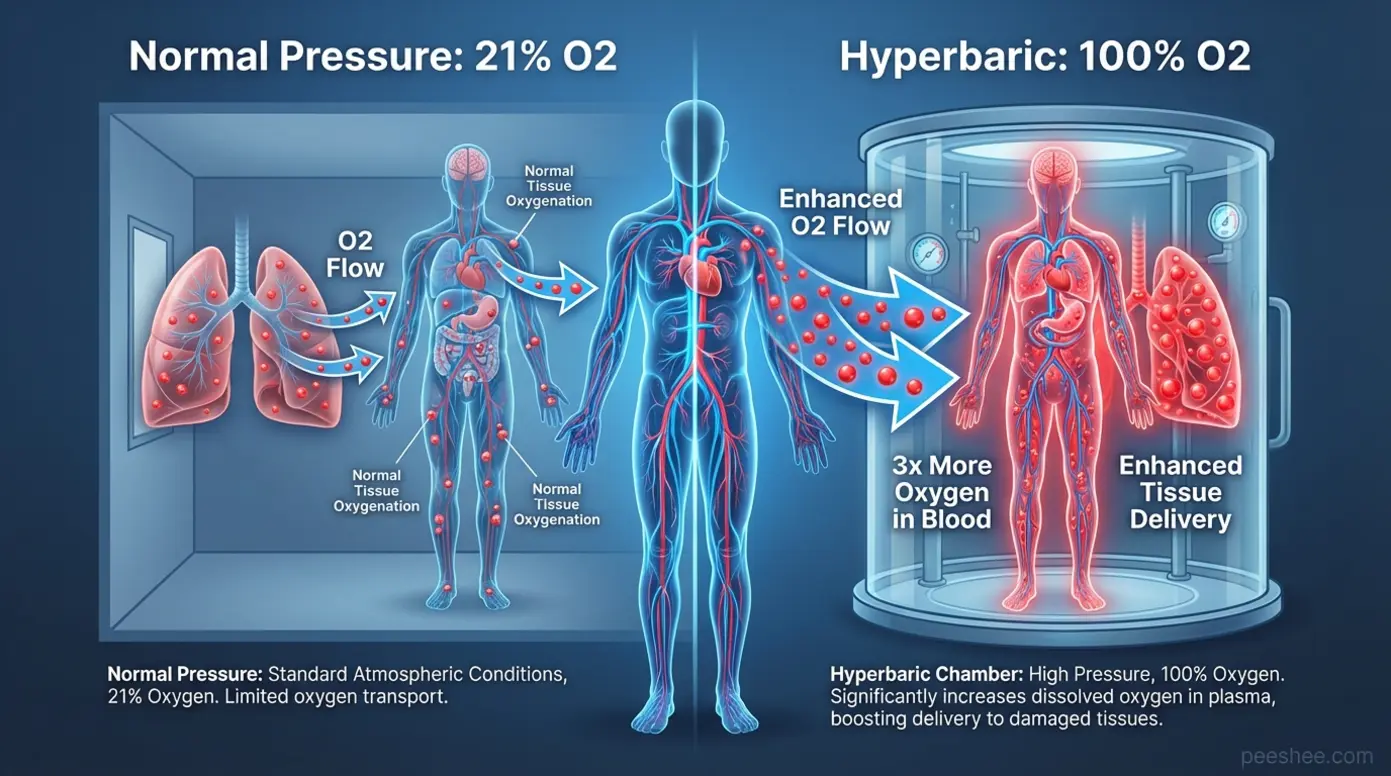
Hyperbaric oxygen therapy (HBOT) uses a special chamber to increase the air pressure around you while you breathe pure oxygen. The core principle behind a hyperbaric chamber is this powerful combination of 100% oxygen and increased pressure, which creates a unique healing environment inside the body. This setup allows your lungs to gather significantly more oxygen than would be possible at normal air pressure.
This process is similar to how a soda bottle holds more carbonation under pressure; the increased pressure in the chamber helps dissolve much higher amounts of oxygen directly into your blood plasma. This "oxygen-rich blood" can then be delivered throughout your body, reaching areas that may have poor circulation due to injury or illness. It effectively bypasses damaged blood vessels to deliver the oxygen needed for healing.
By supercharging the body's oxygen supply, HBOT provides essential support for the body's natural healing mechanisms. This fundamental process is what enables the specific medical benefits used to treat a range of challenging conditions.
How Does Pressurized Oxygen Promote Healing?
Breathing 100% oxygen at a higher than normal air pressure inside a chamber allows your lungs to gather up to three times more oxygen. This extra oxygen dissolves in all body fluids, including the blood plasma, and can reach areas where circulation is diminished. This oxygen-rich blood stimulates the release of vital substances, such as growth factors and stem cells, which are crucial for cellular repair and fighting infection. This process boosts oxygen levels to kickstart and accelerate the healing process.
As the diagram below illustrates, the increased pressure dramatically enhances the amount of oxygen the blood can carry to damaged tissues.
Now that we understand the 'how,' let's look at what a session actually feels like for a patient.
What a Typical HBOT Session Feels Like
According to Johns Hopkins Medicine, "Patients lie on a table that slides into a clear plastic tube. The treatment lasts approximately 2 hours and is painless." During a session, you can rest, listen to music, or watch movies while the pressure in the chamber gradually increases and then decreases. The most common sensation is a feeling of fullness in your ears, much like you would experience on an airplane during takeoff or landing. This feeling can typically be relieved by swallowing or yawning.
While the experience is similar, the equipment itself can vary.
Medical Benefits and Healing Applications
Hyperbaric oxygen therapy is a proven medical treatment for a specific list of conditions approved by the U.S. Food and Drug Administration (FDA). Its primary benefit is its ability to help the body heal wounds that won't heal and fight off certain types of serious infections where tissues are starved of oxygen. The therapy delivers a massive increase in oxygen to damaged tissues, which is the common thread among its approved uses.
The FDA has approved HBOT for conditions such as non-healing diabetic foot ulcers, radiation injuries from cancer treatment, carbon monoxide poisoning, and decompression sickness ("the bends"). For these conditions, the therapy can significantly improve outcomes. While research is exploring its use for other applications like athletic recovery, it's important to distinguish these from its established, approved medical uses to maintain clear expectations and ensure safety.
HBOT is a powerful tool for these specific, approved medical problems. Now let's explore some of those specialized and emerging applications in more detail.
FDA-Approved Conditions Treated with HBOT
The U.S. Food and Drug Administration (FDA) has cleared hyperbaric oxygen therapy for 14 specific medical conditions. For these approved uses, the treatment is often covered by insurance. For example, Medicare notes that for "approved conditions, Medicare Part B (Medical Insurance) covers hyperbaric oxygen therapy." Some of the most common indications include:
- Decompression Sickness ("The Bends")
- Carbon Monoxide Poisoning
- Non-healing wounds, like diabetic foot ulcers
- Radiation injuries from cancer treatment
- Crush injuries
- Severe infections (e.g., gangrene)
- Severe anemia
Beyond these established uses, research is exploring its potential in other areas.
The Science of Accelerated Healing for Chronic Wounds
Chronic wounds often suffer from poor blood flow, which starves the tissue of the oxygen it needs for cellular repair. HBOT is an effective way to speed up healing for these wounds that won't heal because it bypasses this circulatory issue. By dissolving high levels of oxygen directly into the blood plasma, the therapy ensures that oxygen reaches the wound site even if blood vessels are compromised. This oxygen-rich blood not only helps kill certain types of bacteria but also encourages the formation of new blood vessels, leading to faster and more robust healing.
This healing potential has also caught the attention of the sports world.
Specialized Applications and Equipment Types
Beyond its primary medical uses, HBOT is applied in specialized fields, and different types of equipment are used depending on the setting and purpose.
Comparing Chamber Types: Monoplace vs. Multiplace
The hyperbaric chamber itself comes in two main configurations: monoplace and multiplace. Each is suited for different clinical needs.
| Feature | Monoplace Chamber | Multiplace Chamber |
|---|---|---|
| Capacity | One person | Multiple people (2 to 18+) |
| Design | Clear acrylic tube | Large, room-like chamber |
| Oxygen Delivery | Chamber is filled with 100% oxygen | Patients breathe oxygen via masks or hoods |
| Typical Use | Outpatient clinics, individual treatments | Hospitals, treating multiple patients at once |
Understanding Home Chambers: Soft vs. Medical Grade
Home chambers are typically soft chambers, which are portable, inflatable bags that operate at much lower pressures than clinical chambers. In contrast, medical grade chambers are hard-shelled steel and acrylic vessels capable of reaching significantly higher pressures. The Undersea & Hyperbaric Medical Society (UHMS) has issued a consumer warning about soft-sided chambers, noting the "hazards associated with their use, as they operate at lower pressures and oxygen concentrations than medical-grade hard chambers." These devices are not cleared by the FDA for treating medical conditions.
Veterinary Use: Hyperbaric Chambers for Dogs
The principles of HBOT also apply to animals. A hyperbaric chamber for dogs is used in veterinary medicine to treat conditions similar to those in humans. According to the University of Florida Small Animal Hospital, HBOT can "increase blood oxygen concentration to facilitate healing, reduce swelling, and improve outcomes for conditions like severe wounds, infections, and snake bites." This makes it a valuable tool for veterinarians managing complex cases in pets.
Understanding the Risks and Limitations of HBOT
While HBOT is a powerful therapy, it's essential to understand its potential side effects and the situations where it should not be used. A balanced view of the hyperbaric chamber benefits and risks helps ensure patient safety.
Potential Side Effects and Contraindications
HBOT is generally safe, but like any medical procedure, it carries some risks. The Mayo Clinic notes that risks "are generally low but can include middle ear injuries, temporary vision changes, and, rarely, lung collapse or oxygen toxicity." The most common side effects are mild and related to pressure changes, such as ear fullness, fatigue, or temporary nearsightedness.
However, there are situations where HBOT is not recommended. The most critical contraindication is an untreated pneumothorax (collapsed lung), as the pressure changes can be dangerous. A thorough medical evaluation is necessary to determine if you are a suitable candidate. The infographic below summarizes these key benefits and risks.
Fire Safety and Professional Guidance
The high-oxygen environment inside a hyperbaric chamber creates a significant fire risk, which is why a hyperbaric chamber explosion, while extremely rare in clinical settings, is a serious concern that necessitates strict safety protocols. For this reason, Australia's Therapeutic Goods Administration (TGA) "strongly advises against purchasing a hyperbaric chamber for home use," stating that these devices should only be used by qualified healthcare professionals. Items that can create a spark or are flammable, such as electronics, synthetic fabrics, and oil-based skin products, are strictly prohibited inside the chamber to ensure patient safety.
Frequently Asked Questions
What does a hyperbaric chamber do?
A hyperbaric chamber delivers 100% pure oxygen at increased atmospheric pressure to significantly boost the amount of oxygen in the blood. This oxygen-rich blood can then travel throughout the body, reaching damaged tissues to promote healing, fight infections, and reduce swelling. It essentially supercharges the body's natural healing processes. The therapy is used for specific FDA-approved medical conditions.
What are the side effects of the hyperbaric chamber?
The most common side effects of a hyperbaric chamber are mild and related to pressure changes, such as ear fullness, sinus discomfort, or temporary vision changes. These effects are similar to what you might feel in an airplane and typically resolve shortly after the session. Serious risks like lung damage or oxygen poisoning are very rare when treatment is administered by trained professionals.
Who should not use a hyperbaric chamber?
Individuals with an untreated pneumothorax, also known as a collapsed lung, should not use a hyperbaric chamber. The pressure changes during therapy can be dangerous for this condition. Other contraindications may include certain types of ear surgery, a high fever, or some chemotherapy drugs. It is crucial to provide a complete medical history to your doctor for a thorough evaluation.
How much does HBOT typically cost?
A single session of hyperbaric oxygen therapy typically costs between $100 and $350. However, most treatment plans require multiple sessions, so the total cost can range from $1,500 to over $10,000. Costs vary based on the medical facility, location, and the condition being treated. Insurance, including Medicare, may cover the cost for FDA-approved conditions, but pre-authorization is usually required.
Conclusion
Hyperbaric oxygen therapy is a medically recognized treatment that uses a pressurized environment to deliver pure oxygen, accelerating the body's natural healing abilities. While it is FDA-approved and effective for a specific list of conditions like non-healing wounds and carbon monoxide poisoning, it's crucial to be aware of both its benefits and potential risks.
Understanding the practical aspects—such as the differences between chamber types, the importance of professional administration, and the distinction between approved and off-label uses—is key to making a safe and informed decision. The effectiveness of a hyperbaric chamber is maximized when used appropriately under expert medical supervision.
If you are dealing with a condition like a non-healing wound or radiation injury, start by discussing with your doctor whether hyperbaric oxygen therapy is a viable and safe option for you. A professional evaluation can determine if you are a good candidate and help you navigate the next steps.


